
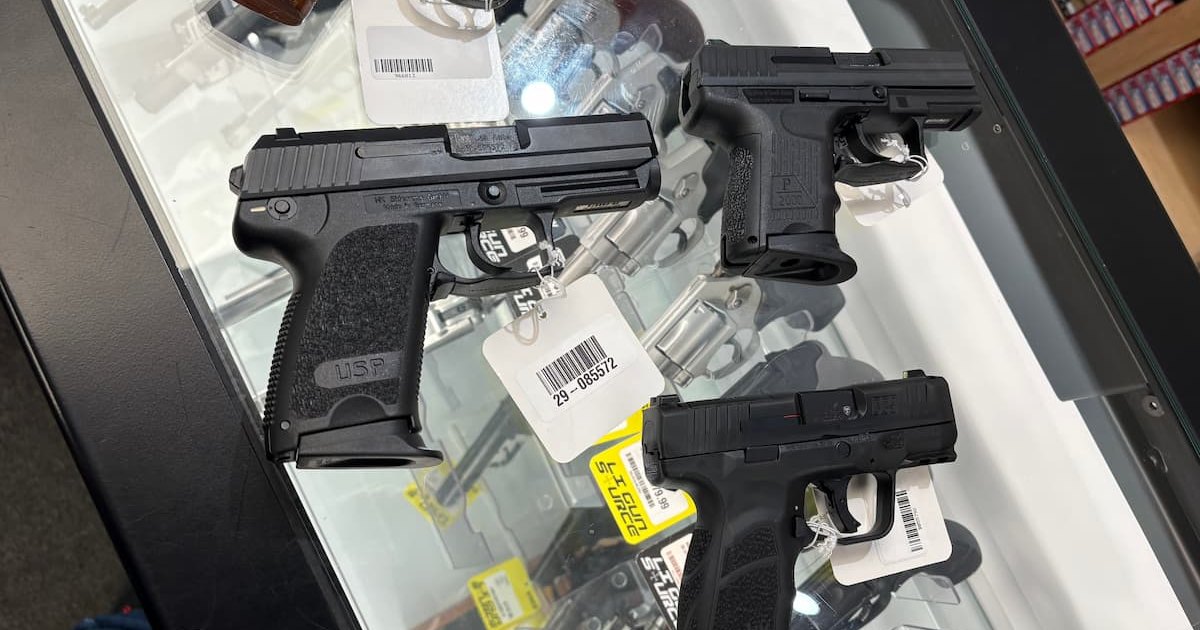
What we check before a used gun goes on the rack
The bore before the finish, lockup and timing, the parts people forget, and what we treat as a walk-away.
Buying a used gun online means trusting a photo and a letter grade. Buying one across a counter means you get to look at it yourself. Here is what we look at first, so you know what to check when you pick one up off our rack, or anyone else's.
The bore, before anything cosmetic
Finish wear tells you a gun was carried. The bore tells you how it was treated. We want bright, sharp rifling with clean edges to the lands, no dark patches that do not clean out and no pitting.
Frosting in an older barrel is common and often shoots fine. Actual pitting is corrosion, it is permanent, and it is the difference between a gun that needs a cleaning and one that needs a barrel.
Lockup, timing and the things you feel
On a semi-auto: does the slide run without grit, does it go fully into battery, is there movement that should not be there. On a revolver: does the cylinder lock up tight at each chamber, does it carry up properly as the hammer comes back, is the cylinder gap sane. A revolver that is out of time is a gunsmith job, not a cleaning.
The parts people forget
- Springs. Recoil and magazine springs are wear items and cheap. On anything with an unknown history we treat them as consumables rather than assume.
- Extractor and ejector. Cheap to overlook, expensive to discover at the range.
- Sights. Are they the factory set, are they straight, and if they are tritium, roughly how old are they. Tritium fades on a schedule whether the gun gets shot or not.
- Magazines. How many came with it, are they factory, do the feed lips look right, do they drop free.
What we treat as a walk-away
Pitting that has gone past the finish into the metal. A bulged or ringed barrel. Cracks anywhere. Home gunsmithing on anything that matters, especially sear and trigger work by an unknown hand. Numbers that do not match on a gun where they should.
Some of these are repairable. The question is whether the repair is worth more than the gun, and often it is not.
Modified is not the same as broken
Aftermarket parts are not automatically a problem, but they change what we are looking at. A quality trigger installed properly by someone who knew what they were doing is fine. The same part installed by someone learning is not, and from the outside those two look identical.
So a modified gun gets a closer look, not a shorter one. If the original parts come with it, bring them.
What to do when you are the one looking
Ask to see it with the action open. Look down the bore toward a light. Work the action a few times slowly. Check that the magazine drops free and seats properly. Look at the muzzle crown for dings. Ask what the shop knows about where it came from, and notice whether you get a real answer.
You are allowed to take your time. Anybody who rushes you on a used gun is telling you something.
Why this is easier in person
A photo cannot show you how an action feels, and a condition grade is somebody else's opinion written down. Handling the gun takes two minutes and answers most of it. That is the honest argument for buying used at a counter instead of a cart.
Come look at the used rack on Route 112 in Medford. Ask us anything about anything on it.