
You inherited a gun collection. Start here.
What to do first, what never to do, and how to find out what is actually in the safe. The cleaning mistake alone costs families thousands.
It usually goes like this. A father, an uncle or a grandfather passes, there is a safe in the basement, and nobody left in the family shoots. Somebody has to deal with it, and that somebody is standing in our shop with a phone full of blurry photos.
We see this often enough to have opinions about the order you should do things in.
First: possession, not price
Before anything else, the guns need to be secure, and the question of who may lawfully possess them needs a real answer.
In New York, whether you can take possession of an inherited firearm — and what you must do about it — depends on the type of firearm, on your own license status, and on how the estate is being handled. It is not the same answer for a shotgun as for a handgun, and it is not the same for an heir who already holds a pistol license as for one who does not.
That is a question for the estate’s attorney, and for your county licensing bureau — not for a blog post and not for a forum. For handguns in our area, that is the Suffolk County Pistol License Bureau; statewide, the New York State Police firearms pages. Call before you move anything. Driving around with a car full of inherited guns while you work out the rules is the single most common way a well-meaning family member creates a real problem.
Do not clean anything
This is the mistake that actually costs money, and it is almost always made with good intentions.
Steel wool on a patina’d Colt. A reblue on a Winchester that had honest wear. New grips, because the originals were cracked. Grinding an old sight base off a military rifle because it “looked wrong.” Every one of those can take a four-figure gun down to a three-figure gun in an afternoon.
Original beats shiny, every single time. A collector wants the finish it left the factory with, worn or not. Wipe the dust off with an oiled rag if you must. Stop there.
Make a list before you make a decision
Before you talk to anyone about money, build a simple inventory. For each gun:
- Manufacturer, model and caliber or gauge
- Serial number
- Barrel length
- Photographs of the markings — roll marks, the barrel address, proof marks, any import stamp
- Photographs of the whole gun from both sides, plus the muzzle and the bore if you can
Then photograph everything that came with them. The box. The sleeve. The hang tag. The manual. Any factory letter or paperwork. On collectible guns, the box and papers are not sentimental extras — they can be a large fraction of the value, and families throw them out constantly.
What tends to be worth more than the family expects
- Pre-1964 Winchesters, especially with original finish
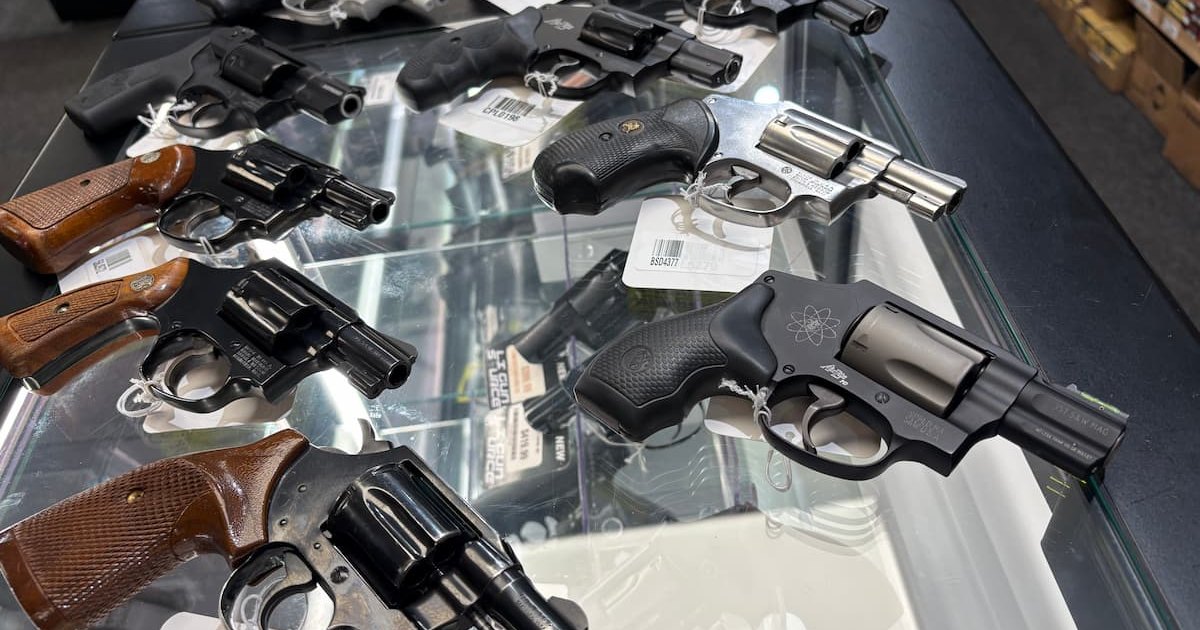
- Older Smith & Wesson and Colt revolvers with original finish, grips and box
- Military rifles with matching serial numbers, and documented bring-backs
- Engraved, commemorative or presentation pieces with their paperwork
- Anything genuinely unfired in the original box
What tends to be worth less
- Field-grade shotguns from the 1980s through the 2000s — there are a great many of them
- Anything refinished, reblued or buffed
- Mismatched military rifles, and sporterized ones
- Guns with pitting under a coat of oil, which is what a lot of stored-in-the-basement means
- Handloads and reloads — no resale value at all
Where we come in
Bring us the list and the photographs first. You do not need to load the collection into your car to start the conversation.
What we will tell you is which pieces we can buy outright, which will do better on consignment, and which ones we are simply not the right buyer for. That last category is real. If there is a genuine collector’s piece in the safe, a general firearms shop is not where it brings the most money, and we would rather point you to someone who specializes than make you a number you would regret taking. We would like your repeat business more than we would like one good margin.
Ammunition, powder and primers
Factory ammunition in decent condition is worth talking about. Reloads are not, and we will not take them — there is no way to know what is in them.
Old powder, primers and deteriorating ammunition should not go in the household trash and should not be handled casually. Call your local police department’s non-emergency line and ask how they want it handled. They deal with this regularly and they will tell you.
There is no rush on the money
Secure the guns now. Get the legal question answered now. Everything after that — appraisal, sale, consignment, keeping one because it was his — can wait until you know what you have. Decisions made in the first week are the ones people regret.
Long Island Gun Source, Medford, NY. Bring the list, not the collection. Nothing here is legal advice.