How to Choose a Gun Safe (Buy Bigger Than You Think)
Gun safe size, fire ratings, locks, bolting down and dehumidifiers on Long Island. What to look at before you buy, from a Medford gun shop.
In this article
Nobody has ever told us their safe was too big. We’ve heard “I wish I’d gone bigger” more times than we can count.
So start there, and then work through the rest: fire rating, lock, where it goes, and how you’ll keep it dry. Long Island air is hard on steel.
Buy bigger than you think
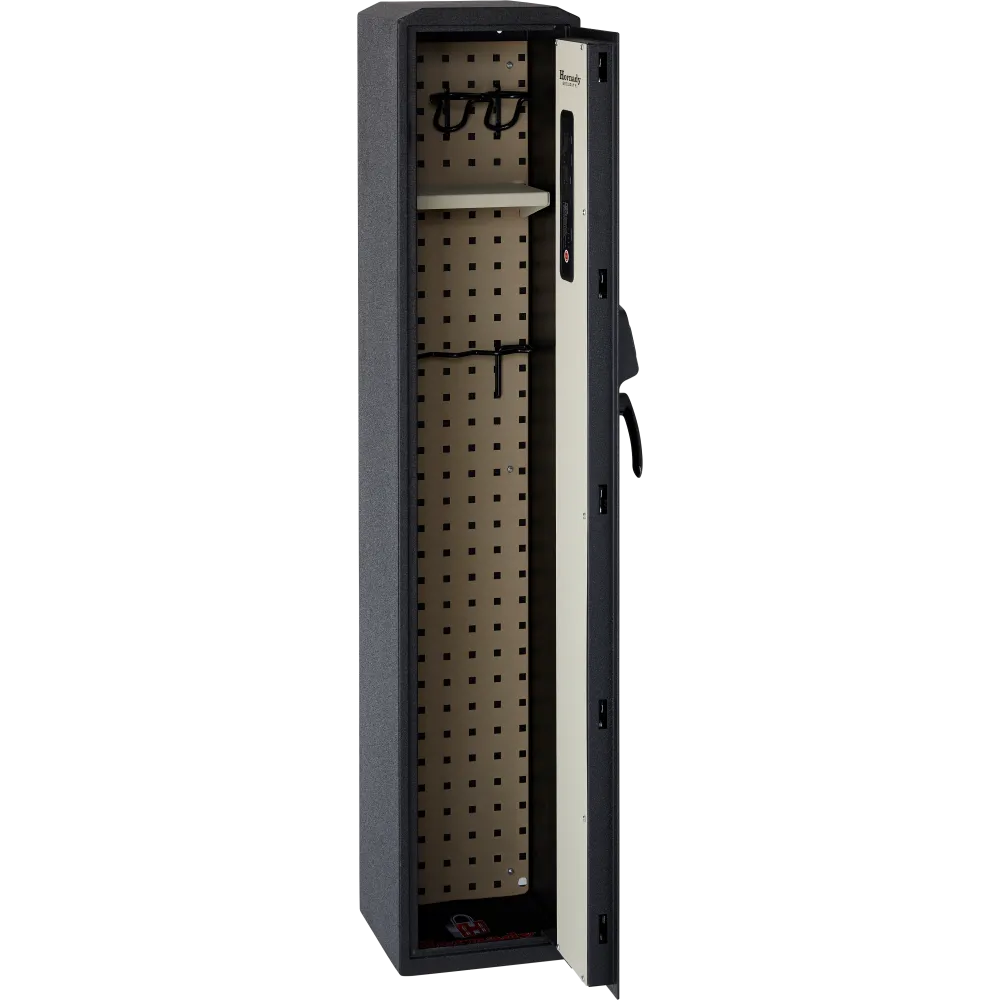
The number on the box is the first trap. A “24-gun” safe holds 24 guns only if they’re skinny, have no optics, and are packed barrel to barrel. Put scopes on a few rifles, add a shotgun with a wide stock, and that safe holds maybe half that.
Then the rest arrives. Handguns, boxes of ammo, the papers you want protected, a spare optic, the watch you don’t wear. Shelves fill fast.
A good rule: count what you own now, add what you expect to buy in the next five years, then go one size up. Moving a safe later is harder than paying a bit more now.
Before you choose a size, measure:
- The door you’ll carry it through, and every turn on the way.
- The floor. A big safe loaded up can weigh as much as a refrigerator full of bricks. A basement slab is ideal. Upstairs needs some thought.
- The ceiling height, if it’s going in a basement.
Fire ratings: read the fine print
Almost every gun safe advertises a fire rating, like “1200°F for 30 minutes.” That sounds precise. It often isn’t.
That number usually describes the temperature of the furnace in the test, not the inside of the safe. What matters is how hot it got inside, and who ran the test. Some ratings come from independent labs. Some come from the manufacturer’s own test. A few come from nowhere in particular.
When you compare safes, ask:
- Who tested it? An independent lab beats “factory tested.”
- How hot did it get inside? Paper starts to char somewhere above 400°F. Guns and documents both want it lower.
- How long? Thirty minutes is a common baseline. House fires often burn longer.
- What about the door seal? A good safe has a seal that expands in heat to close the gap around the door.
A fire rating buys you time, not a guarantee. For the paperwork you truly can’t replace, like your pistol license, deeds and passports, a small fire box inside the safe adds another layer.
The lock: mechanical, electronic or biometric
Mechanical dial. No batteries. Lasts for decades. Slower to open, especially under stress or in the dark. If you want something that will work in 30 years, this is it.
Electronic keypad. Fast, and you can change the code. Batteries need changing. Most have a warning beep before they die. Quality varies a lot, so stick with a lock from a known lock maker, not a no-name pad.
Biometric (fingerprint). Quickest of all when it reads well. Readers vary from very good to frustrating, and cold or wet fingers don’t always read. Biometrics make the most sense on a small handgun vault by the bed, where speed matters most.
Whatever you pick, ask what the lock is rated to and who made it. A good safe with a cheap lock is a cheap safe.
Bolt it down
This is the step people skip. An unbolted safe can be tipped onto its back, where it’s much easier to pry open. A small one can just be carried out.
Most safes come with holes in the floor for anchor bolts. Put it on concrete if you can, and anchor it. Into a corner is better still, so there’s less room to get a pry bar behind it. Keep it out of plain view from windows and the garage door.
Long Island damp: plan for it
Here’s what people on the Island don’t think about until they find orange spots on a blued barrel. A sealed steel box in a basement holds moisture. Close to the water, the air carries salt. In winter, cold guns coming into a warm house sweat.
A safe needs a way to stay dry:
- A rod-type dehumidifier. A heated rod that sits at the bottom of the safe and warms the air just enough to keep moisture off the metal. Needs an outlet, so pick a safe with a power pass-through.
- Rechargeable desiccant. A canister or bag that soaks up moisture. Bake it or plug it in to dry it out when the indicator changes color. No cord needed.
- A small hygrometer. A few dollars, and it tells you whether the first two are working.
Wipe guns down with a light coat of oil before they go in for the winter. More on that in our winter gun care post in December.
Handgun vault vs long-gun safe
They aren’t either/or. Most people who own both kinds of gun end up with both.
A handgun vault keeps one or two pistols close and fast, usually in a bedroom. Look for steel, a lock you can open in the dark, and a way to bolt it down.
A long-gun safe is the main storage. It holds the rifles, shotguns, the rest of the handguns, ammo and papers.
Both meet New York’s storage rule when they’re locked. Our plain-English post on the safe storage law covers when the law requires one.
Come look at one in person
You can’t judge a safe from a photo. Open the door, feel the hinges, try the lock, look at the shelves. Bring your measurements and a rough count of what you own. We’ll help you size it and tell you straight whether the fire rating means anything.
Long Island Gun Source, 2291 Route 112, Medford. (631) 320-9500. Closed Mondays.